
Rainforests are filled with abundant wildlife and rare flora, but they are among the trickiest environments to capture well. With the iffy weather, temperamental lighting conditions and animal camouflage, getting stunning photographs can be a challenge. So, much like the hidden wildlife you too have to adapt.
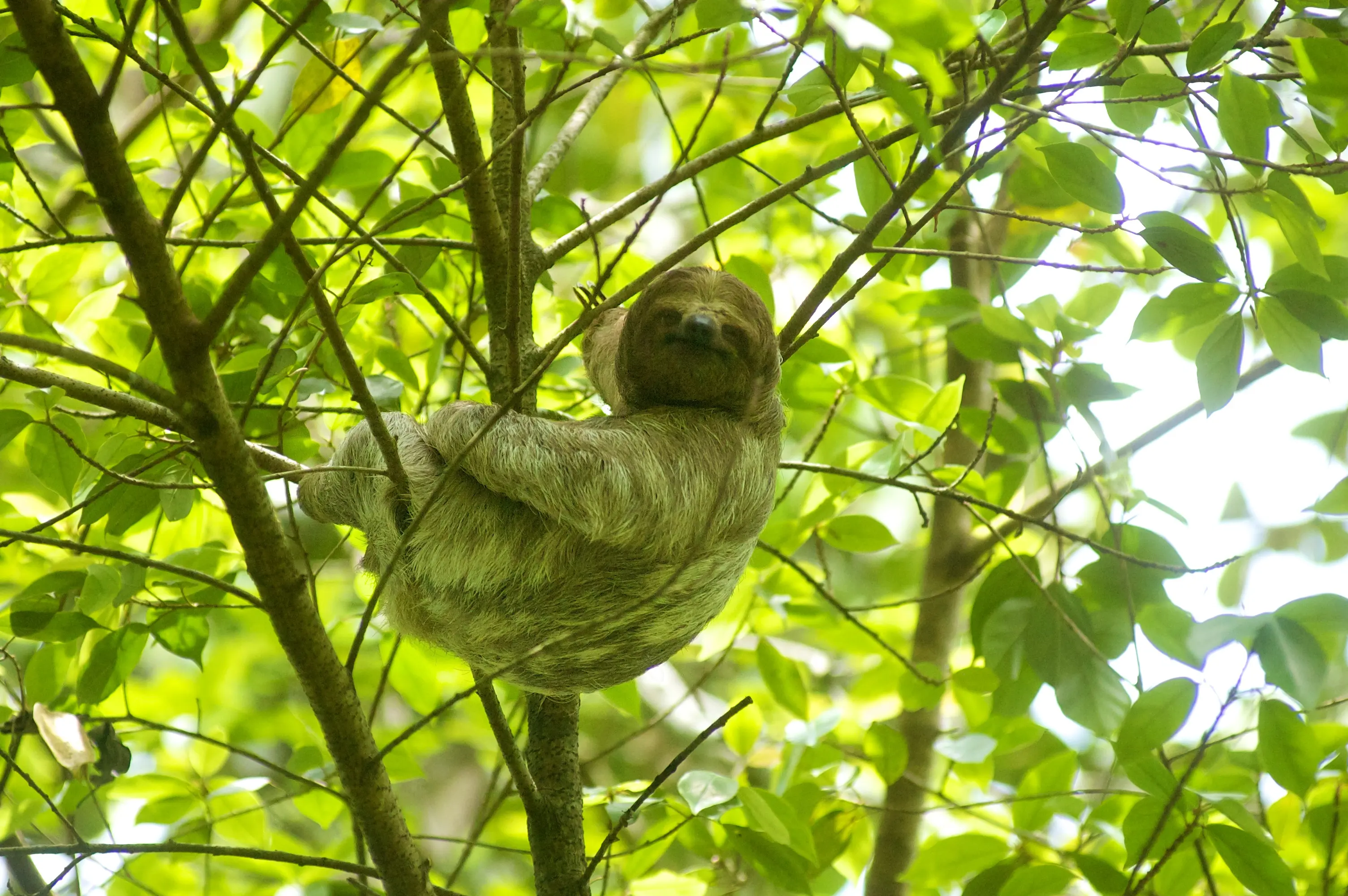
Photo by Chase Guttman
1. Gear-up. When I was in Costa Rica with Tauck Bridges (I was teaching photography workshops there), I had to change gear quickly and consistently. I used a super wide to capture landscape photos, a telephoto lens to shoot swinging hollering monkeys high in the tree tops, and a macro lens to nab a starkly-colored poison dart frog on a leaf. All this gear needed to be within access at a moment’s notice. Of course, the gear you need depends on what you plan on shooting. But expect on using a telephoto lens for capturing wildlife and a wide angle for shooting landscapes.
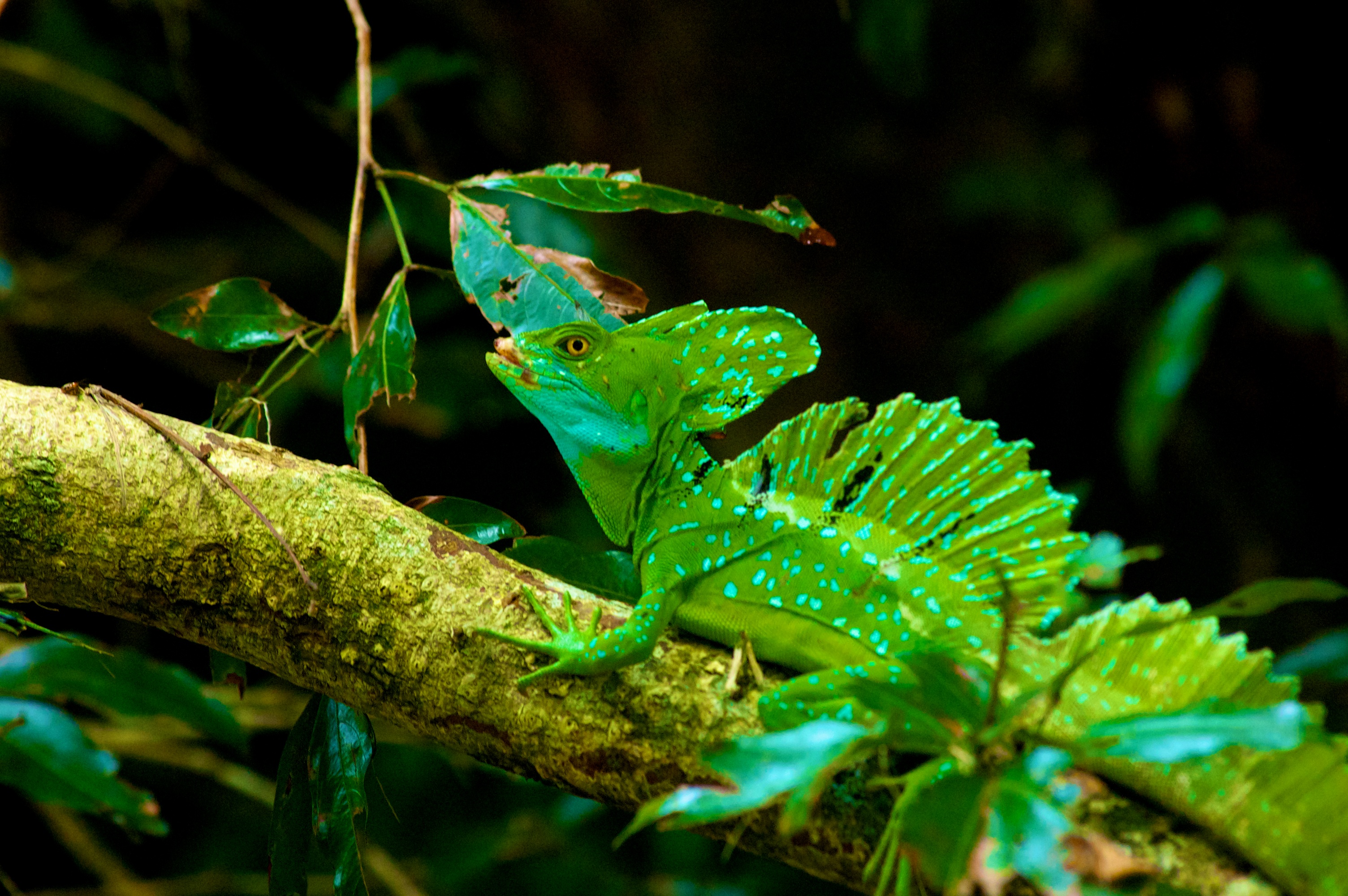
Photo by Chase Guttman
2. Stay on your toes. If you’re alert and aware, rainforest serendipity can happen anywhere at anytime. In a sudden downpour near a steaming volcano, I took shelter under a tree, turned around, and saw a preening porcupine in full view. Animals are literally everywhere, so stay on the look out – smell, listen, look and search for the small creatures and floral patterns that can turn into beautiful images. Also, think ahead– do you have the right lens on in case a jaguar suddenly comes into view?
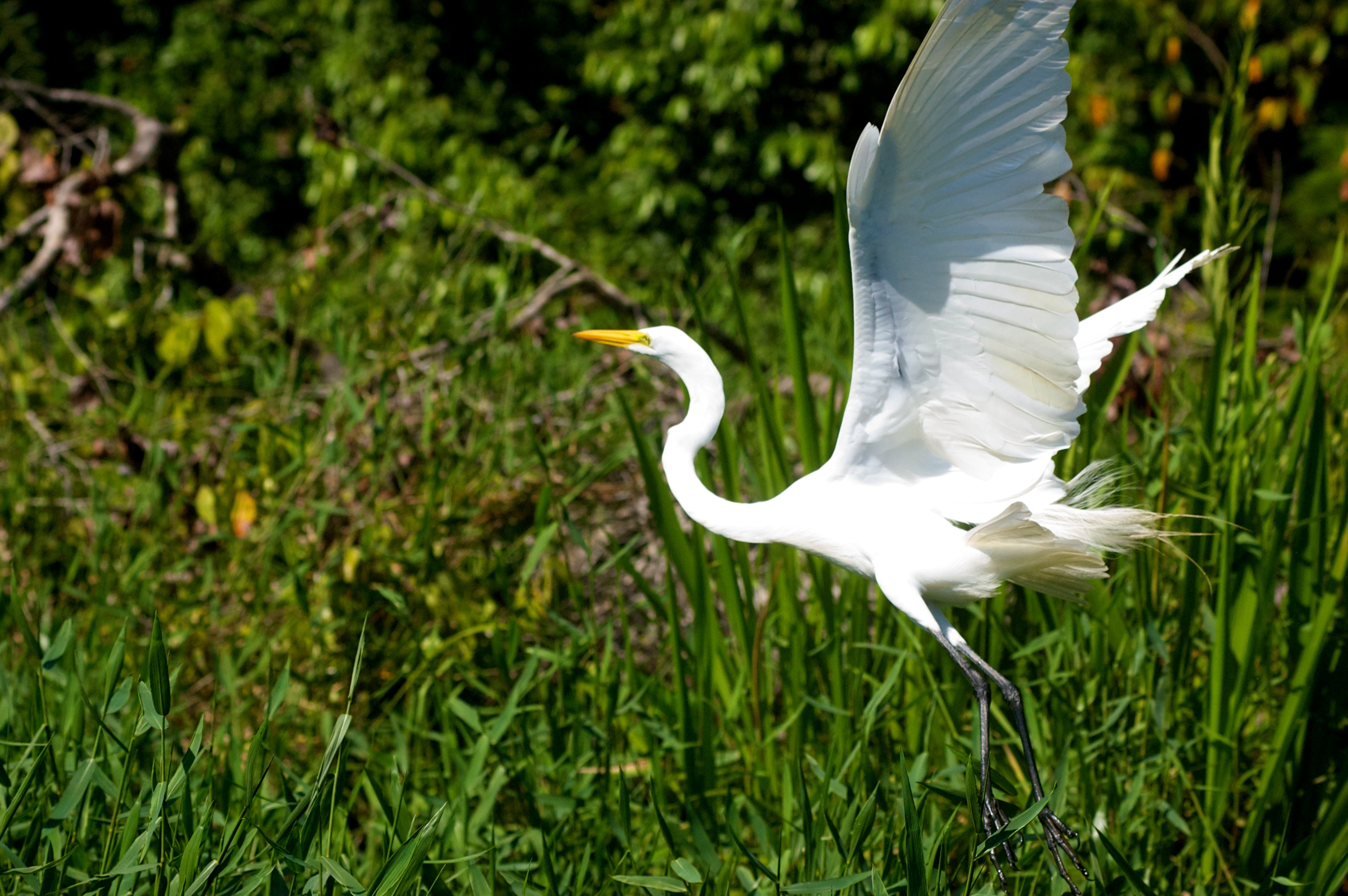
Photo by Chase Guttman
3. Prepare for rain. If you’re in a rainforest for an extended period of time, it will probably rain (see tip 2) so always travel with rain gear. Have something waterproof to cover your camera. But when it rains, you don’t have to pack up. Sometimes you can get creative pictures of the flora and fauna during this time. The grey skies allow for light that is more even– when it’s sunny, the light comes through the canopy unevenly and creates shadows. Try using the weather to capture things like the dew on the leaves. In these situations I recommend using a polarizing filter.
4. Start early and stay late. Wildlife are most active and the light most stunning first thing in the morning and just before sunset. For instance the photograph below taken on my recent trip was shot early in the day. Also, use blue hour to give your landscape photographs more gorgeous hues and to ameliorate the effects of a rainy day. Here’s Christopher O’Donnell’s excellent article on getting textured blue hour results.
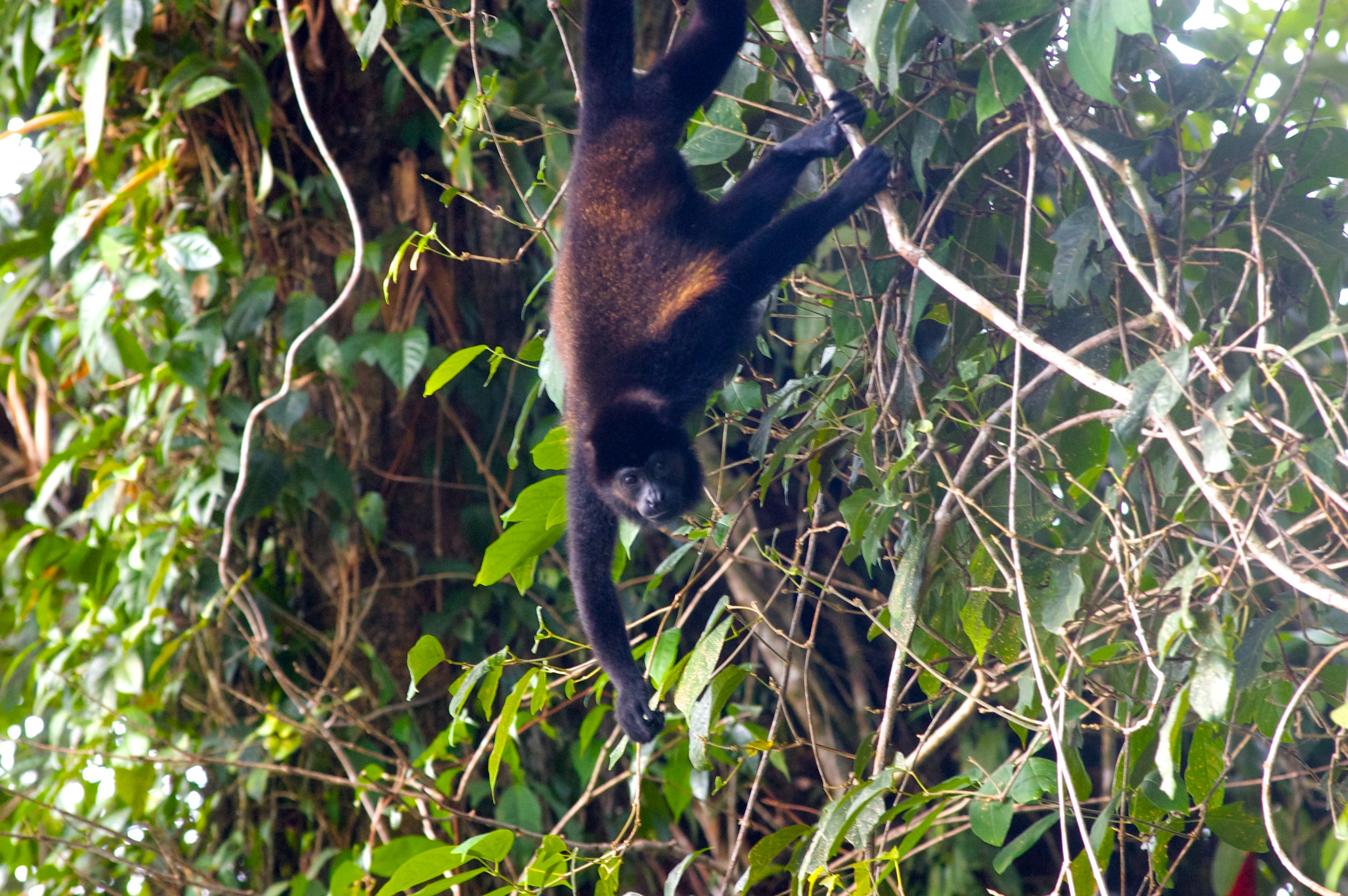
Photo by Chase Guttman
5. Tripod it. With its layers of lush green canopy, rainforests can often be too dark for hand-held photographs. To make matters worse, off camera lighting may not be sufficient (do you really want to make a beautiful natural scene look artificial with a flash?) So, use your tripod and understand the fundamentals of low light photography.
Remember that ISO is the camera’s sensitivity to the amount of present light. So the higher the ISO the brighter the image.
Additionally, play with aperture or the width of space in which light is permitted to enter the camera. Understand that a wider aperture allows more light to come in (note that aperture is recorded in fraction form- so f8 is wider than f22). As for shutter speed (or how long the camera allows light to enter) you may consider lengthening the exposure.
6. Patience is key in wildlife photography. When mother said good things come to those who wait, she was right.
Chase Guttman is an award-winning photographer and a regular writer for Light Stalking. Check out his site, his Twitter or visit his photo tips blog.


3 Comments
just need a rain forest now to go and try out those tps…
yep….and one without skeeters. lol
Hi Chase,
I’m off to Borneo next month for 7 weeks in the Rainforest and 10 weeks on the Coral Reef.
I am looking at buying a canon SX40 with Gorillapod for my land shots and a Canon S100 with underwater case for my underwater shots. The reason I am considering both, is because I would like to have the option of using a Polaroid or Micro lense and because it’s cheaper than buying the SX40 and finding an underwater case that can be used with it. With the SX10 case costing £500+ by itself.
However my main concern is the humidity. It will be rainy season and I don’t want to buy the SX40 unless I can keep it in good working conditon. I would appreciate any advise you can give, please note I am a complete Novice! and would appreciate any advise you could give
Best Regards
Paul