Build the frame on purpose
Use negative space, perspective, visual weight and framing because you chose them, not because they happened to be there.



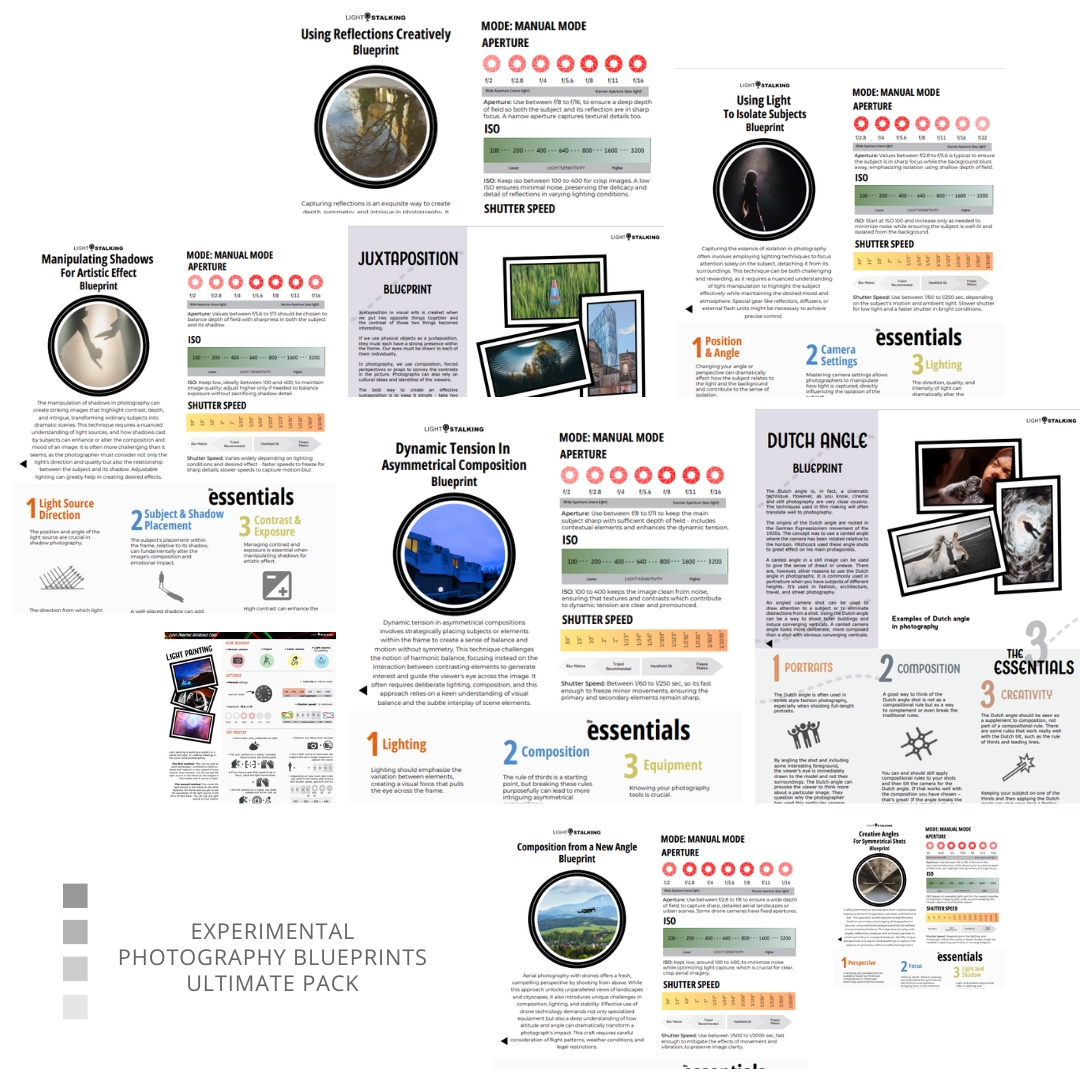
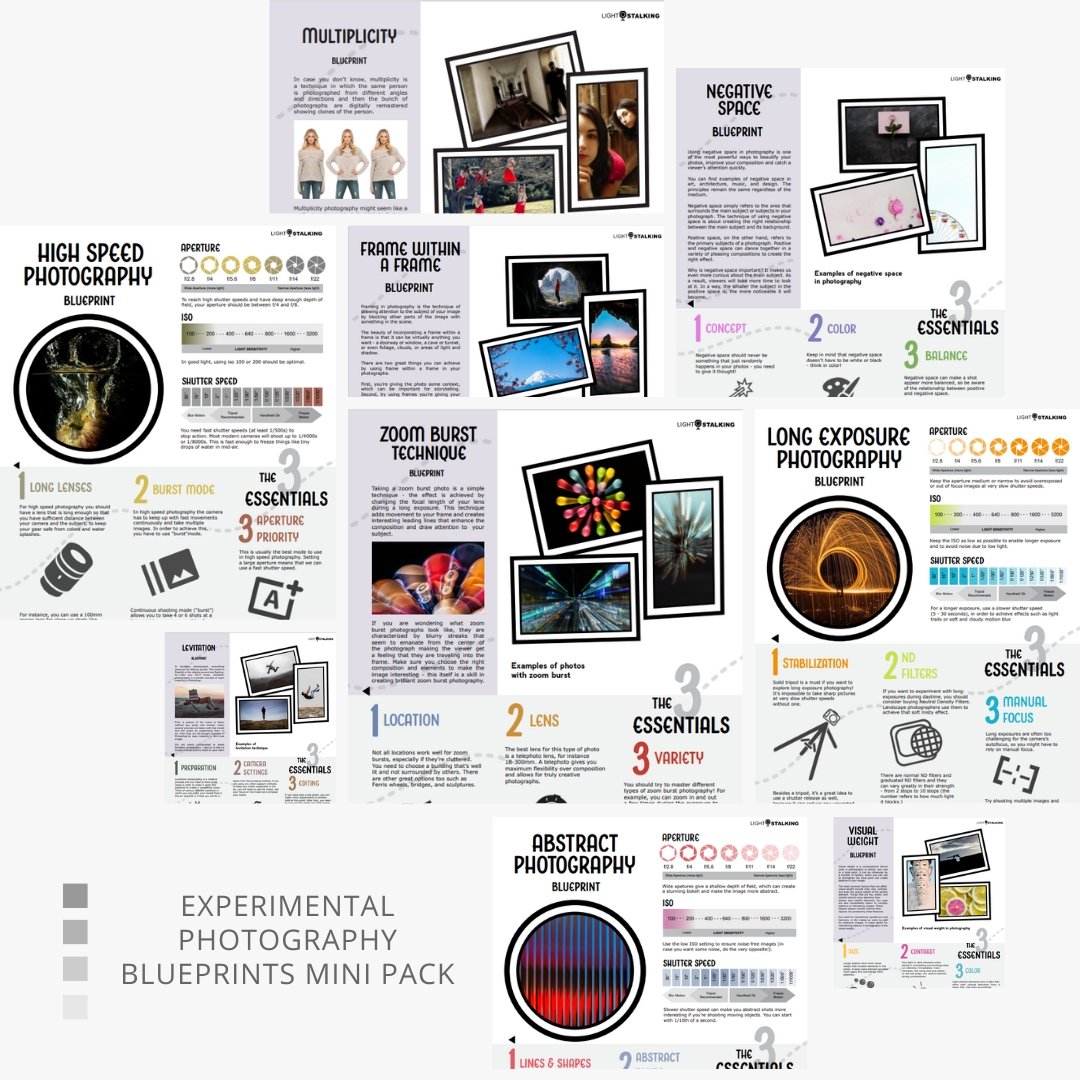
These digital, printable references are for photographers who know the basics and want to play with long exposure, levitation, high-speed work, zoom bursts and other advanced or trick photography techniques. Each Blueprint gives you a sensible place to start, then leaves room to make the shot your own.


This is not a beginner fundamentals pack. It is for the point where a technically correct photo is no longer enough and you want to make something less predictable.
Use negative space, perspective, visual weight and framing because you chose them, not because they happened to be there.
See how shutter speed, subject movement and camera position change long exposures, frozen action and zoom bursts.
Set up the shot, take a test frame and fix what gives the illusion away. That is how levitation, multiplicity and forced perspective start to look convincing.
Photographers who already know their way around a camera and want stranger results. This is not an exposure course. Some ideas are quick to try. Others need a steady camera, a patient subject or several test frames before the shot works. The Blueprints help you get started without spelling out every last creative choice.
The photographs below show the sort of territory these Blueprints explore. They are examples, not a promise that your attempt will produce the same image.


Use time and movement to stretch a moment beyond what the eye sees.
Freeze a fraction of a second and reveal details that would otherwise disappear.

Plan pose, support and frame so the final photograph makes gravity seem optional.


Build a single scene from repeated appearances of the same subject.

Turn an ordinary scene into a rush of lines and movement during the exposure.


Use the scene itself to contain the subject and direct the viewer’s attention.


Let the quieter part of the frame give the subject more presence.


Use viewpoint and scale relationships to make the frame tell a playful visual lie.
The Blueprint gets you moving. Your subject, location, light and taste decide where the photograph ends up.

You do not need another course sitting unfinished in a browser tab. A Blueprint is a short digital reference you can print or keep on your phone while you work on one technique.
There is a lot to keep straight when you try an unfamiliar technique. Each sheet pulls the useful bits together so you can check them beside the camera and get on with the photograph.

You get a sensible starting range instead of a supposedly perfect setting. Use it for the first frame, look at what happened, then change it to suit your light and the effect you have in mind.

Every Blueprint has at least three short tips, including approaches that tend to help and mistakes worth watching for. They are the sort of reminders you need when a small change in timing or position could rescue the shot.

Each sheet picks out three things that can make or break the technique. You can pay attention to those while you shoot instead of trying to remember a chapter full of theory.
These comments are from people who bought other Light Stalking Blueprint products. They show why photographers like having a short, printable reference nearby.
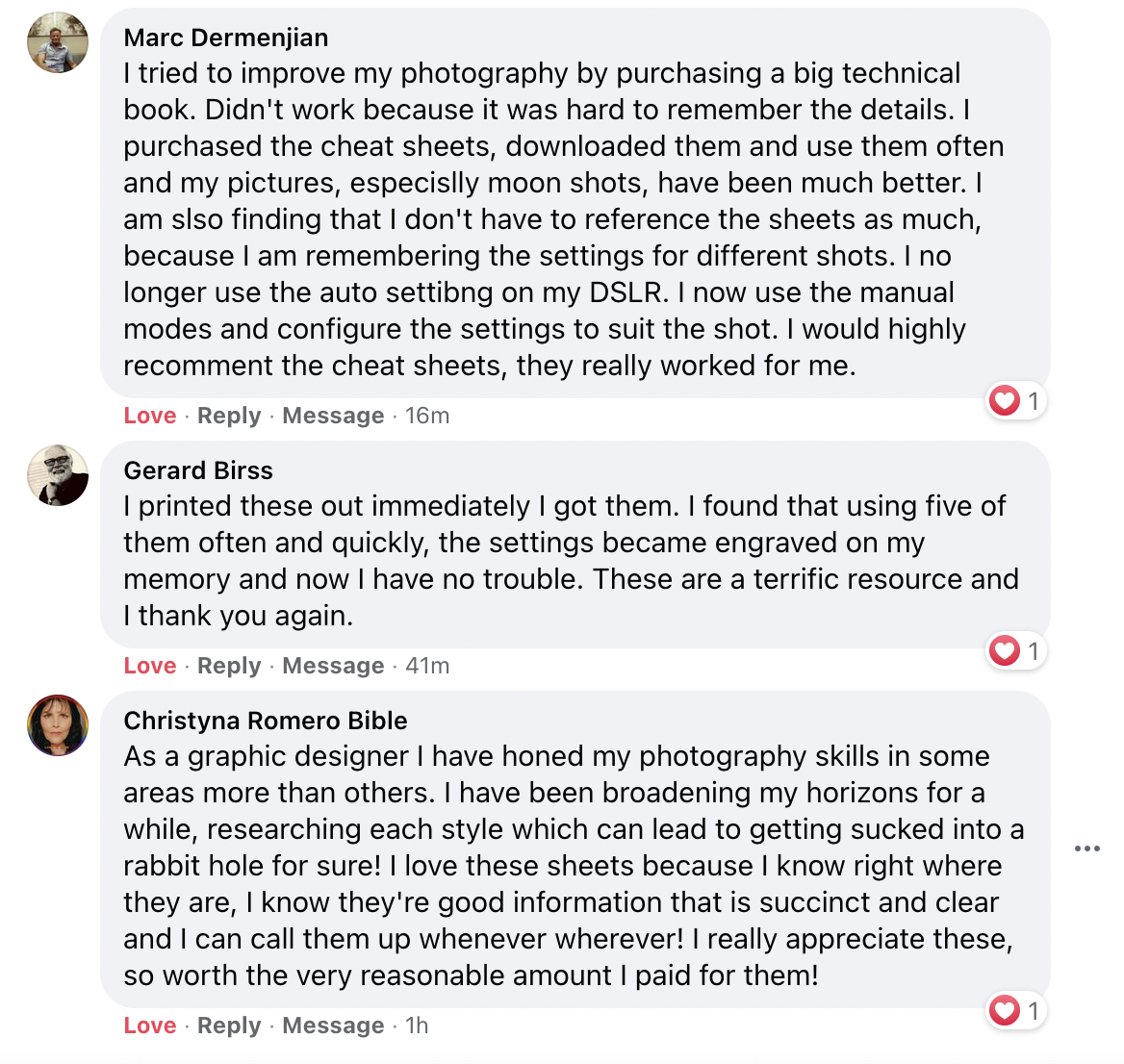
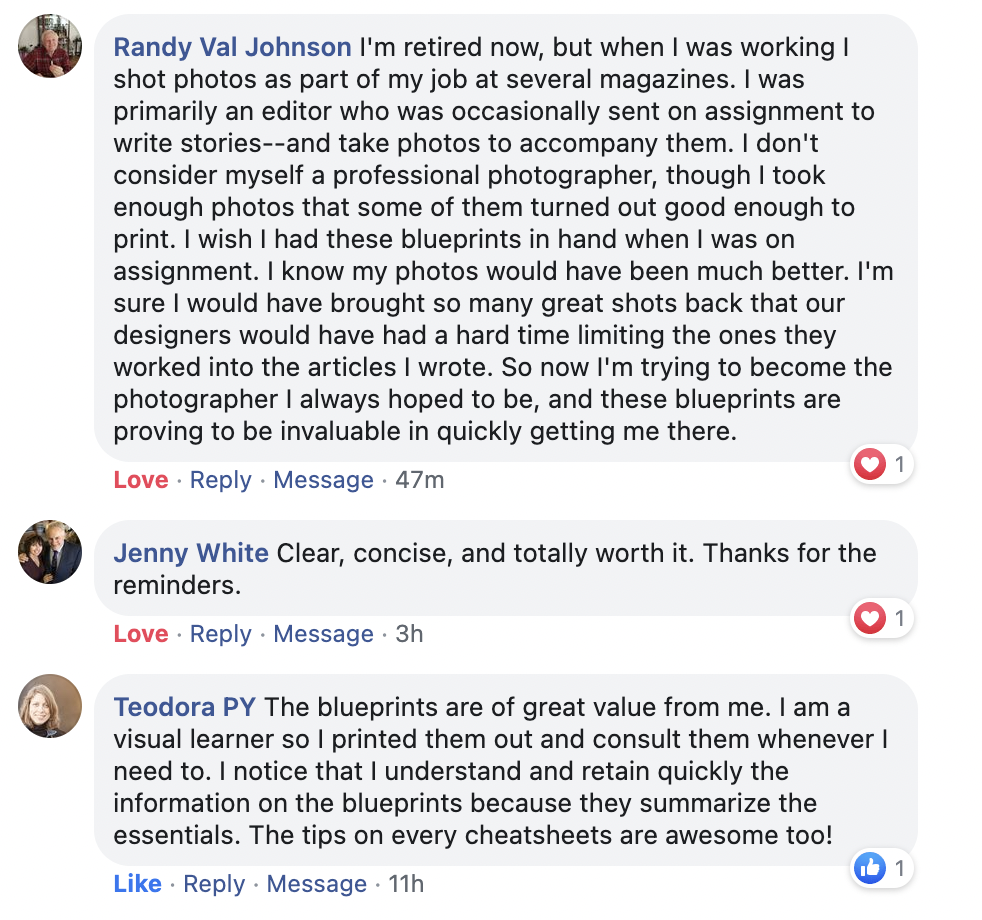
The comments refer to other Light Stalking Blueprint products, not this Experimental collection.
What the sheets cover, what you may need and what happens if you buy them and change your mind.
No. It assumes you already understand the basics of using a camera. The sheets are for photographers who want help getting started with less familiar techniques.
Not for every sheet. Some ideas only need a camera and a careful choice of viewpoint. Others work better with a tripod, flash, remote release, props or a patient subject. Use the gear you have and adapt the idea to the conditions.
Each digital, printable sheet has a suggested settings range, at least three short tips and three things to pay attention to. It is something to check during a shoot, not a course you have to finish beforehand.
Click any pack comparison button. The popup shows what each option contains, who it is for and what it costs. You can then continue to SamCart checkout if you are ready.
Probably not, and the gallery is not making that promise. Your subject, light, location, equipment and choices will change the result. The sheets give you a starting point so you can test the idea and see where it leads.
Pick an effect, check the suggested range, take a test frame and look closely at what happened. Then adjust. You can keep the sheet on your phone or computer, or print it and put it in your camera bag.
Both collections have a 60-day money-back guarantee. If you change your mind, you can request a refund within 60 days.
Pick an effect, try it, and come back for another when you feel like changing direction. The larger collection gives you enough range to keep doing that for quite a while.
Choose a technique, set up the conditions and take a test frame. The interesting part is what you change after that.
See the Blueprint Pack Options