There's a common myth in drone photography where users will assume that getting the drone higher automatically produces better photos. And it's easy to send a drone 100 meters into the air, admire the spectacular view and then come back with some surprisingly plain or boring images. But it's exactly at this point that drone photographers should resist the inclination to go out and grab new gear. Better images can be had through a better understanding of composition, light and perspective, just as with any other camera.
In this short guide we're going to take a look at four specific drone photography composition techniques that will help you find more interesting angles for your images as well as how to use natural light to make those images stand out.
How to Plan a Successful Drone Photography Shoot
The rules around drone flying vary from country to country and it’s your duty to understand and adhere to them. Most countries require some form of registration and often an online test. There are also restrictions on distance you can fly and height levels along with restricted zones.
Your preflight planning should encompass all of these as well as thinking in advance about the light and composition aspects. We have many tools at our disposal to help us with that.
In the UK we have the CAA website which clearly defines how and where we can fly our drones. We have excellent resources like DroneMap that allow us to see restricted areas, areas of special scientific interest and notams – temporary hazard information. We also have excellent weather apps and Ephemeris to aid with light position and elevation. Once we have done all our preflight planning and prep, we are ready to fly.
Why Flying Higher Doesn't Always Mean Better Drone Photos
The biggest mistake a lot of newcomers to drone photography make is to put the drone up to its maximum allowable altitude and start firing away. That’s a natural thing to do, the view we see from 120m can be spellbinding, but that often doesn’t translate well into good photography.
There is another reason why we often fly up higher, and oddly it’s because it feels safer. New drone fliers are often very wary of potential ground hazards. This wariness can also affect your creativity, if you are flying with some apprehension, you will struggle creatively.
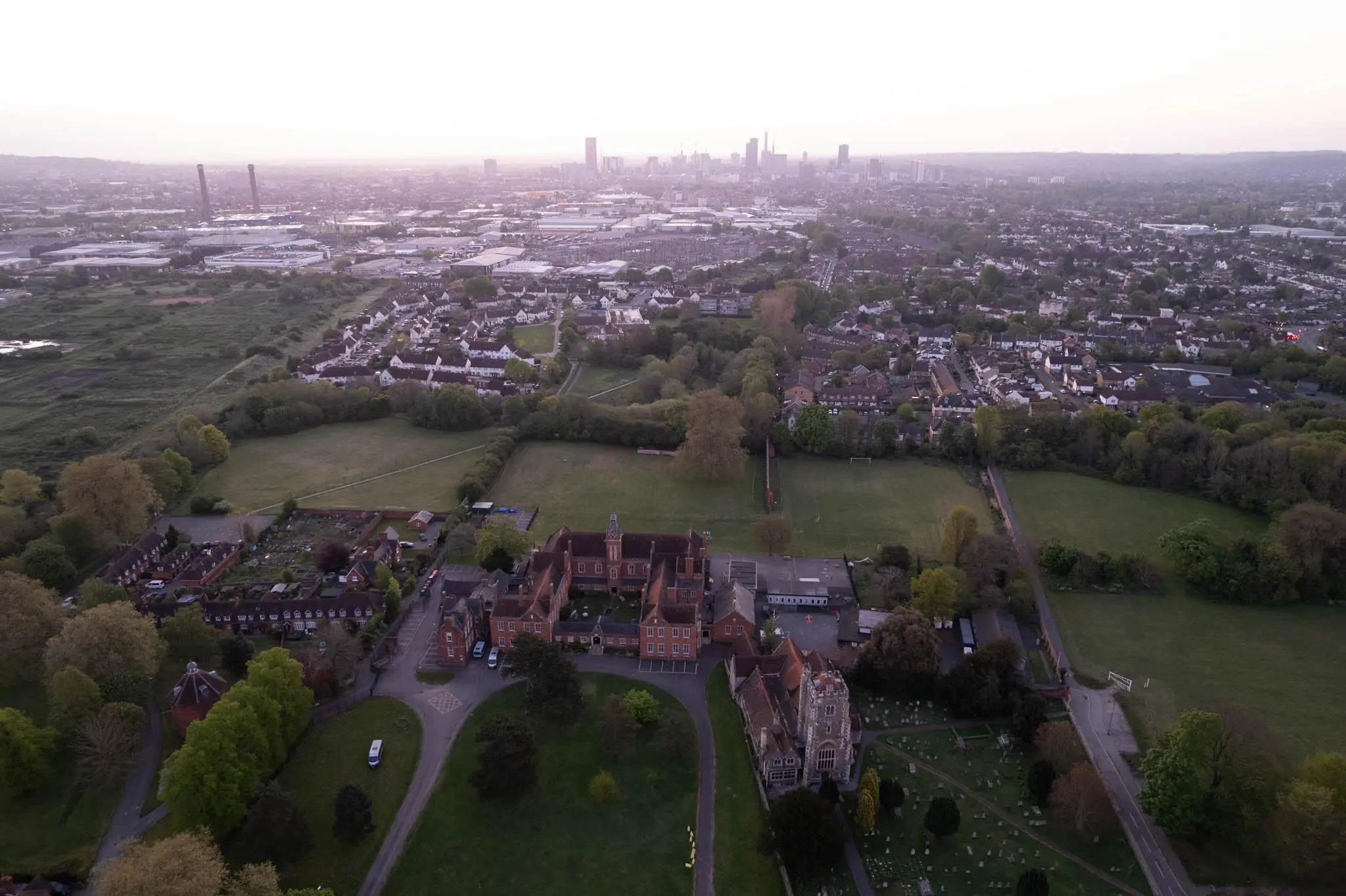
You need to get into the mindset that a drone is a camera that you can operate in three dimensions. Beyond that, the rules of composition and light are very much the same. Spatial awareness is perhaps more important when shooting from a drone because you are relying on a two dimensional screen rather than lifting your eye from the viewfinder. This can be tricky at first but by practicing with the drone relatively close to you, you can start to build up a picture of how space and subject work together and how significantly they can change with a small adjustment to height or angle. As you start to master this you will soon start to see your drone more like another ground based camera. Practice is very much key in the early days of drone flying. You should be flying to build your confidence in the drone, with your photography a secondary option. As your drone confidence increases and you become more relaxed at the controls, you will find yourself becoming more creative with your photography and even video.
Drone Photography Composition: 4 Angles to Try
As we mentioned before, drone composition is not wildly different to ground based photography. There are however some shots that we can do with a drone that would be virtually impossible with a larger camera. Let’s have a look at some typical drone compositions.
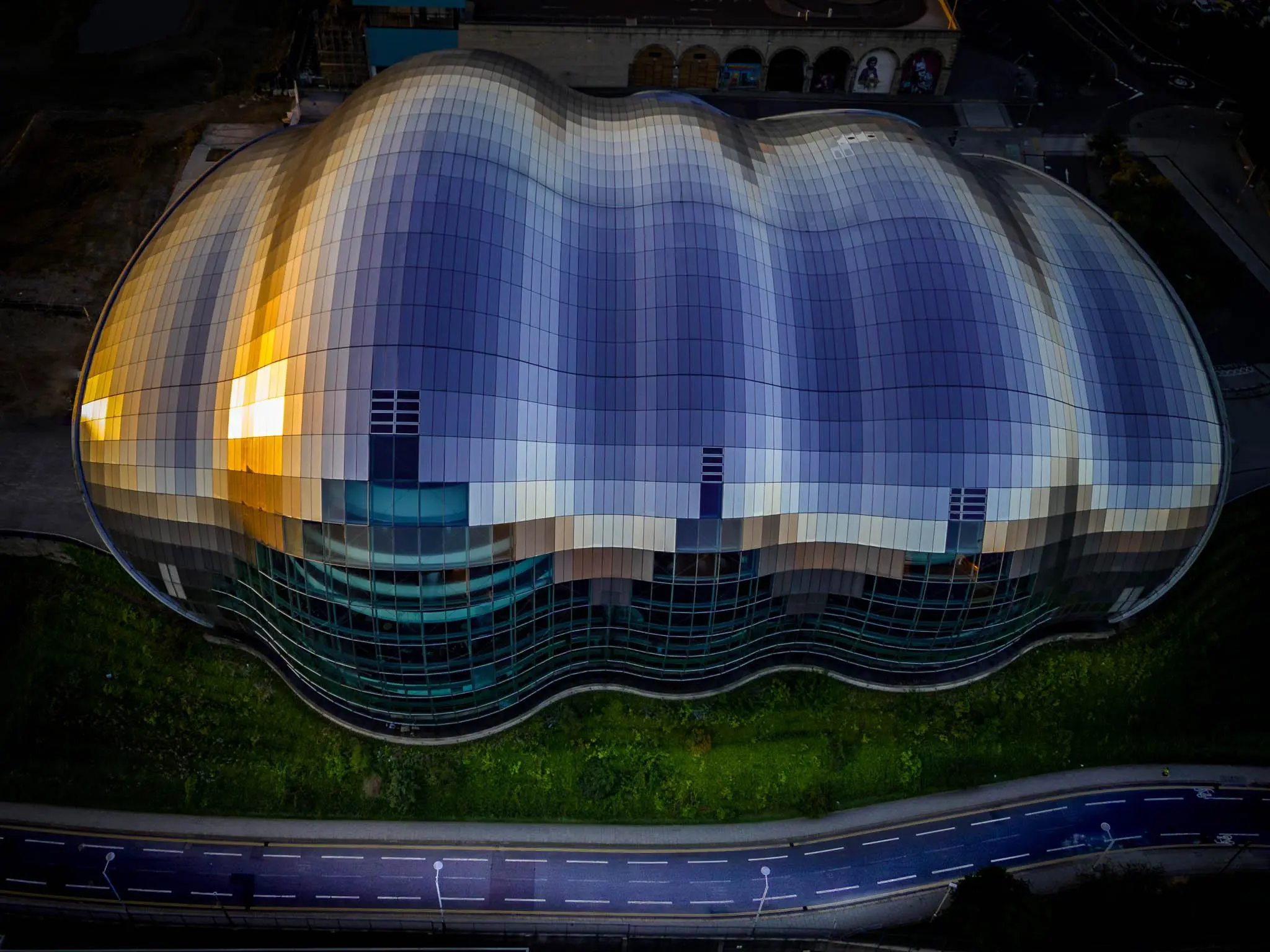
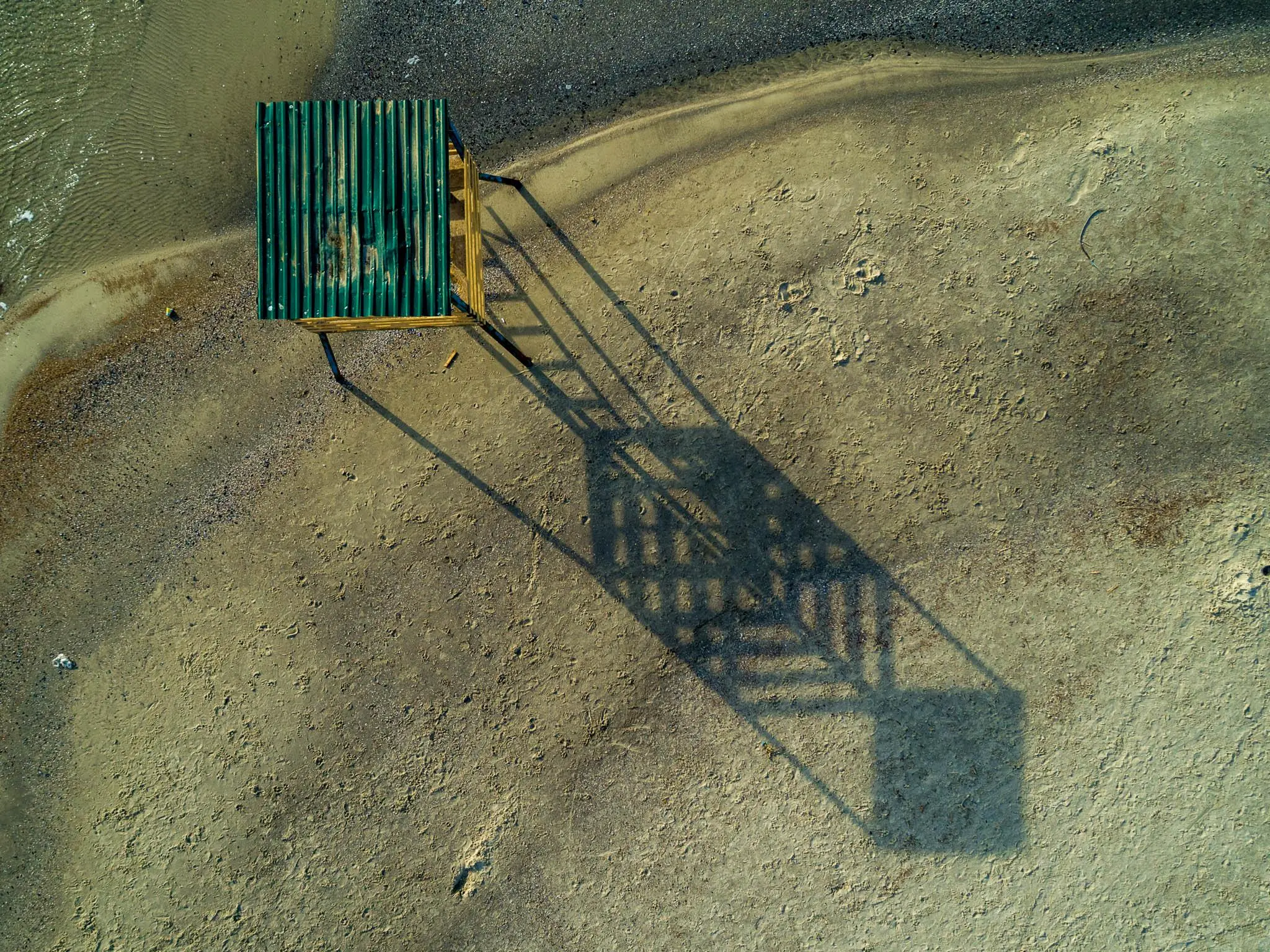
- Top-Down: This is one of the most powerful and striking images that you can capture with a drone. You are looking for contrasts or juxtapositions in the image such as a river and a road or sandy beach with blue ocean. Most drones have a button on the controller that will instantly point the camera straight down rather than needing to scroll it down. Have a look at our vertical drone composition guide for more ideas on this one).
- Elevated Tripod: Rather than go high, keeping the drone a few meters above your head can open up some new perspectives. This works particularly well on familiar subjects where the eye has been trained to see from ground level. The space from about two to five meters is a really great place to get interesting angles.
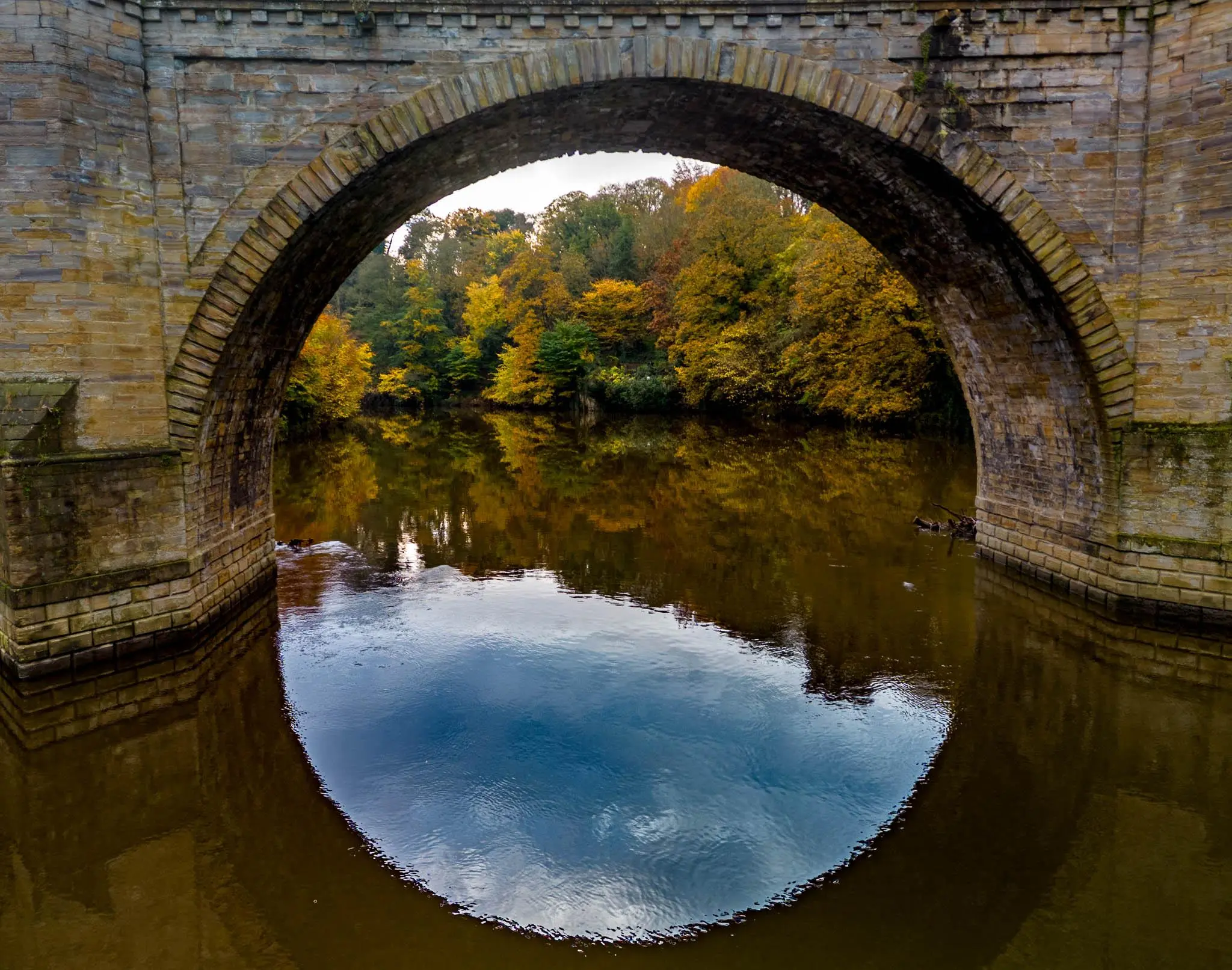
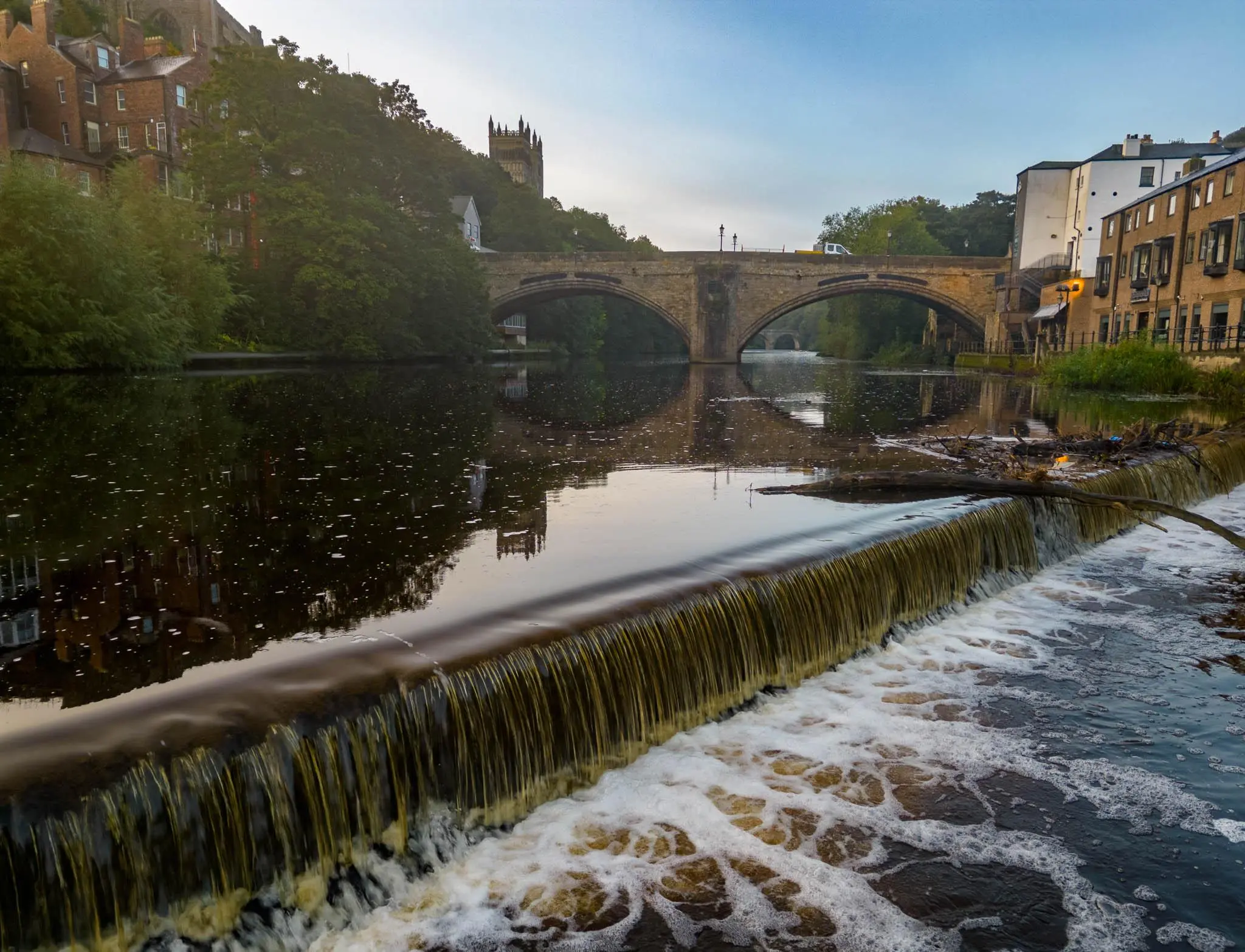
- Ultra-Low: This is a shot for the more experienced drone flyer as it can take some skill and confidence. As photographers we know that low down shots can add visual gravitas to our subjects. With a drone, we can get our camera into places that we could never get to physically, for example low down over a river getting a unique angle on a bridge.
- Negative Space: Drones are fantastic for finding and shooting negative space. Whilst the ground can often be quite cluttered, getting up higher allows us to look for those areas of nothingness that can make a subject stand out. This technique often works well with the top-down view.
Drone Photography Lighting Tips
As we mentioned earlier, planning is a vital consideration to drone photography and this extends to planning where the light will be (We have an interesting article on light painting with drones here). Whilst we can fly our drone some distance away we are unlikely to be able to fly to the other side of a large subject – say a cathedral. This is why time of day and planning are important.
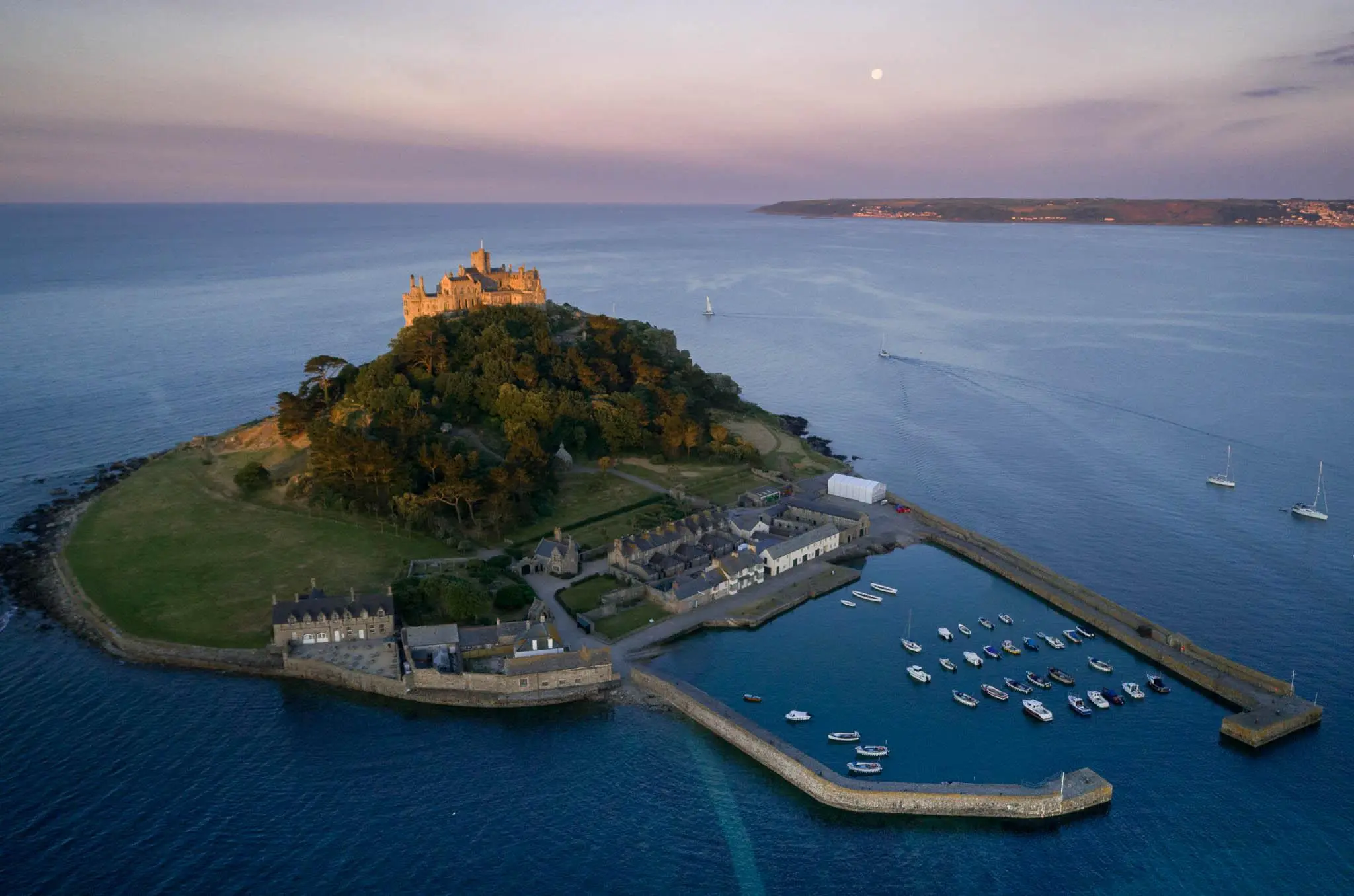
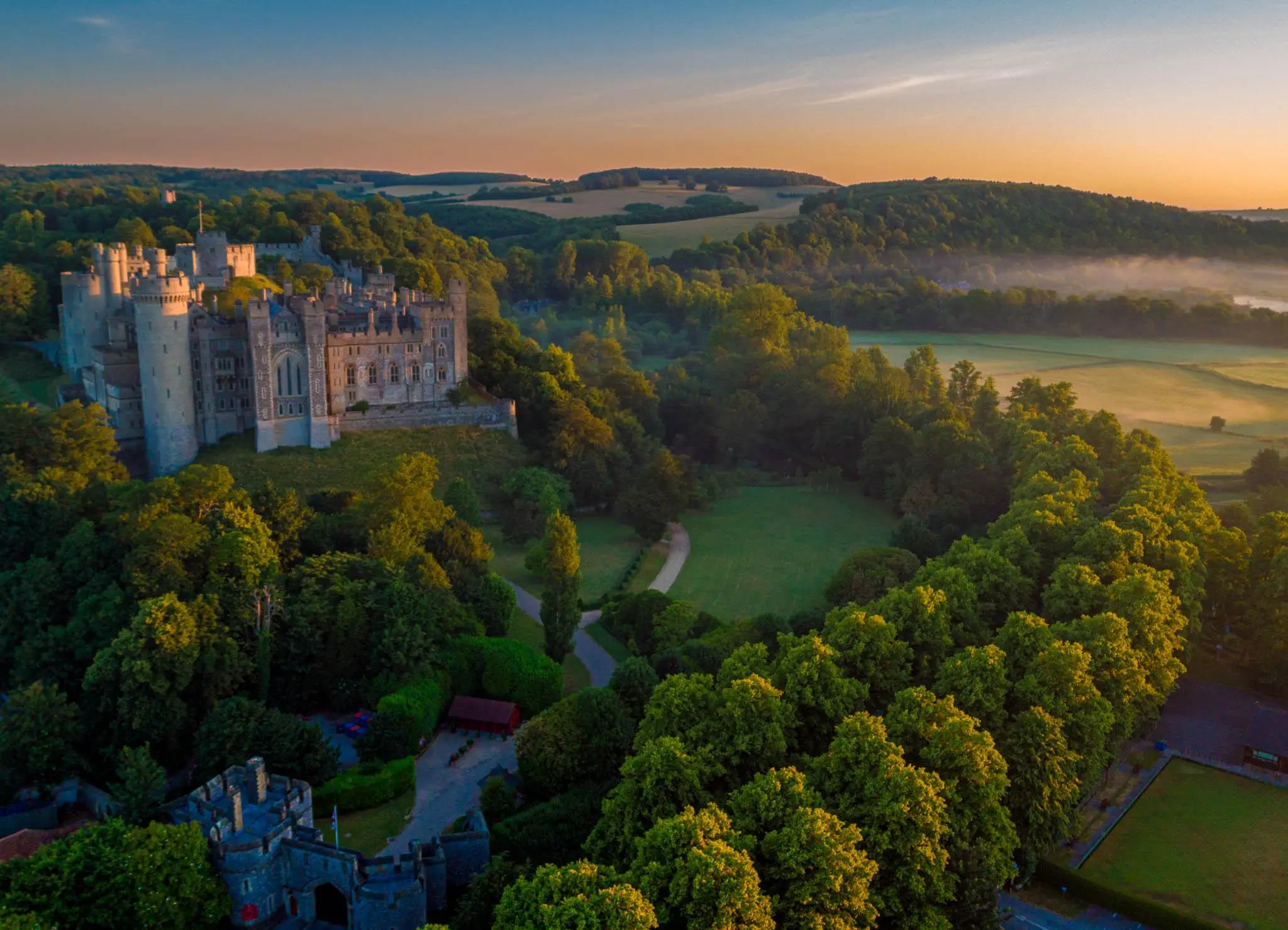
One of the best times of day, as in ground photography is the golden hour. That time just after the sun has risen or is about to set. In the morning golden hour the winds are often very calm, water can take on a mirror like look and mist and fog can be draping a subject. This can make drone photography at this time fantastic.
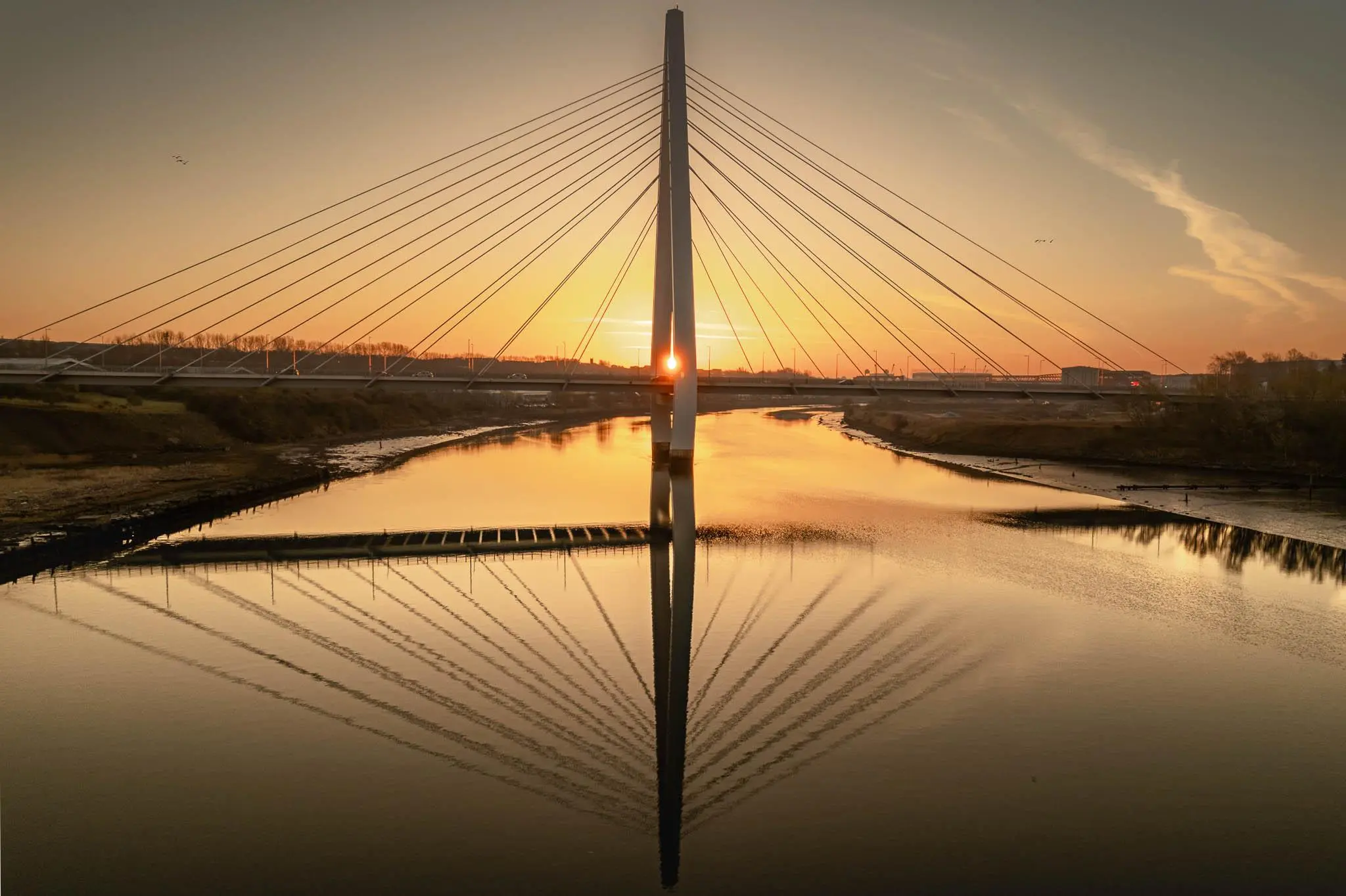
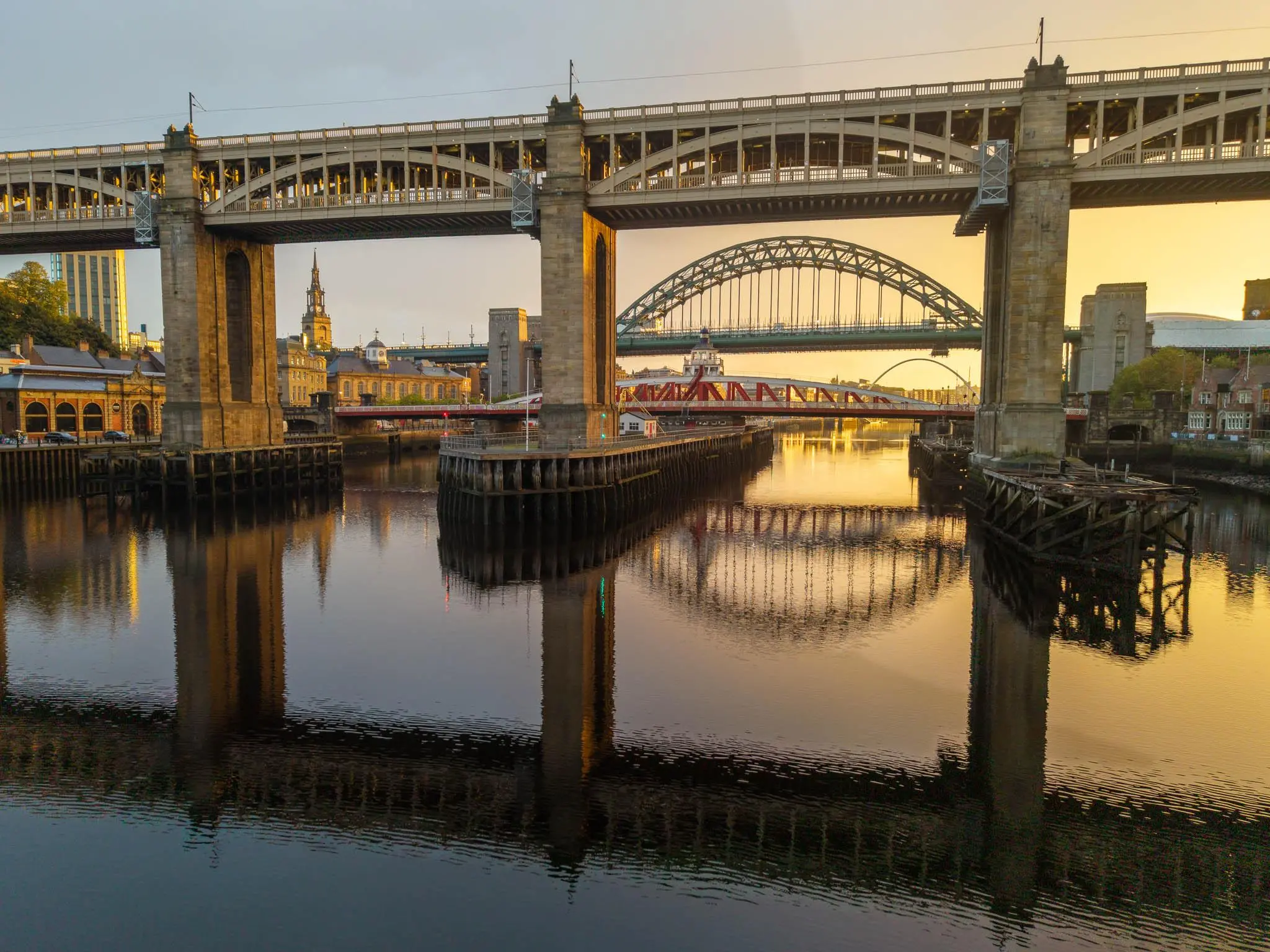
There is a caveat though. Be aware of your country’s drone regulations. In some places you cannot fly before sunrise or after sunset without special permissions, this can mean you have to work fast to stay in the golden hour. In the UK we can fly in twilight/dark so long as our drone has a green flashing light and we can determine its orientation.
One thing to be aware of is the lower dynamic range of drone sensors. As they are small they can struggle with the contrast particularly between a bright sky and darker ground. Most drone apps/controller have a 3 or 5 stop bracket mode built in, and it’s well worth using that in tricky lighting. With modern AI denoising, low light, high ISO is not such a problem as it used to be, at least for still images. Video doesn't yet have such advanced tools to clean it up.
There is the question of filters as well. This is often bought up by newcomers, particularly ND filters. In reality ND filters are really only useful for video where they keep the shutter speed down. Whilst it is possible to do long exposure ND photography with a drone, the results can be quite variable.
The other filter often touted as essential is a circular polarising filter. Whilst this can help cut reflections and saturate foliage, it does so in quite a narrow band. As we often fly drones at multiple angles to our subject, polarisers can be a hindrance rather than an aid. This is doubly so as we cannot easily rotate them to adjust the strength.
Final Tips for Taking Better Drone Photos
Drones can allow us to get some incredible stills and footage. However, pre-planning is vital, fortunately we have a plethora of tools to allow us to do that. Good drone photography is also about confidence. Having confidence in not only your drone’s capabilities but also your own. That comes through constant practice, at first controlling the drone then getting the shot. When you have mastered it, you have literally added a whole new dimension to your photographic capability